Build Production-Grade RAG Systems for Reliable, Grounded AI
Move beyond the basic “documents → embeddings → vector database → LLM” approach and learn how to engineer RAG systems designed for relevance, accuracy, grounding, traceability and reliability.
This hands-on 2-week specialization takes you through the complete RAG engineering lifecycle—from transforming real-world data into AI-ready knowledge to advanced retrieval, context engineering, production architecture and RAG evaluation.
You will also explore the major RAG architectures and patterns used to solve different real-world problems, including Naive RAG, Advanced RAG, Hybrid RAG, Corrective RAG, Self-RAG, Adaptive RAG, Graph RAG and Agentic RAG.
What You’ll Learn
🧠 LLM & Context Engineering
Understand the role of the LLM within a RAG system:
- Model selection
- Context windows
- Token economics
- Structured outputs
- Context optimization
- Query understanding and rewriting
- Grounding techniques
📚 Enterprise Data → AI Knowledge
Learn how raw data becomes useful knowledge for an AI system:
- Document ingestion
- Document processing
- Content cleaning
- Chunking strategies
- Metadata design
- Embeddings
- Knowledge pipelines
🔎 Advanced Retrieval Engineering
Go beyond basic similarity search:
- Semantic search
- Metadata filtering
- Hybrid search
- Multi-query retrieval
- Query transformation
- Reranking
- Retrieval optimization
🏗️ RAG Architectures & Patterns
Understand when and why different RAG approaches are appropriate:
- Naive / Basic RAG
- Advanced RAG
- Modular RAG
- Hybrid RAG
- Corrective RAG (CRAG)
- Self-RAG
- Adaptive RAG
- Graph RAG
- Agentic RAG
- Multi-Query RAG
- Hierarchical RAG
- Conversational RAG
- Multimodal RAG
🏢 Production RAG Architecture
Learn how to design RAG systems beyond a simple prototype:
- Vector databases
- Retrieval pipelines
- Context assembly
- Citations
- Source attribution
- Access-aware retrieval
- Scalable architecture
- Failure handling
🛡️ RAG Quality & Reliability
Learn how to determine whether your RAG system is actually producing trustworthy results:
- Retrieval relevance
- Context relevance
- Answer relevance
- Faithfulness
- Groundedness
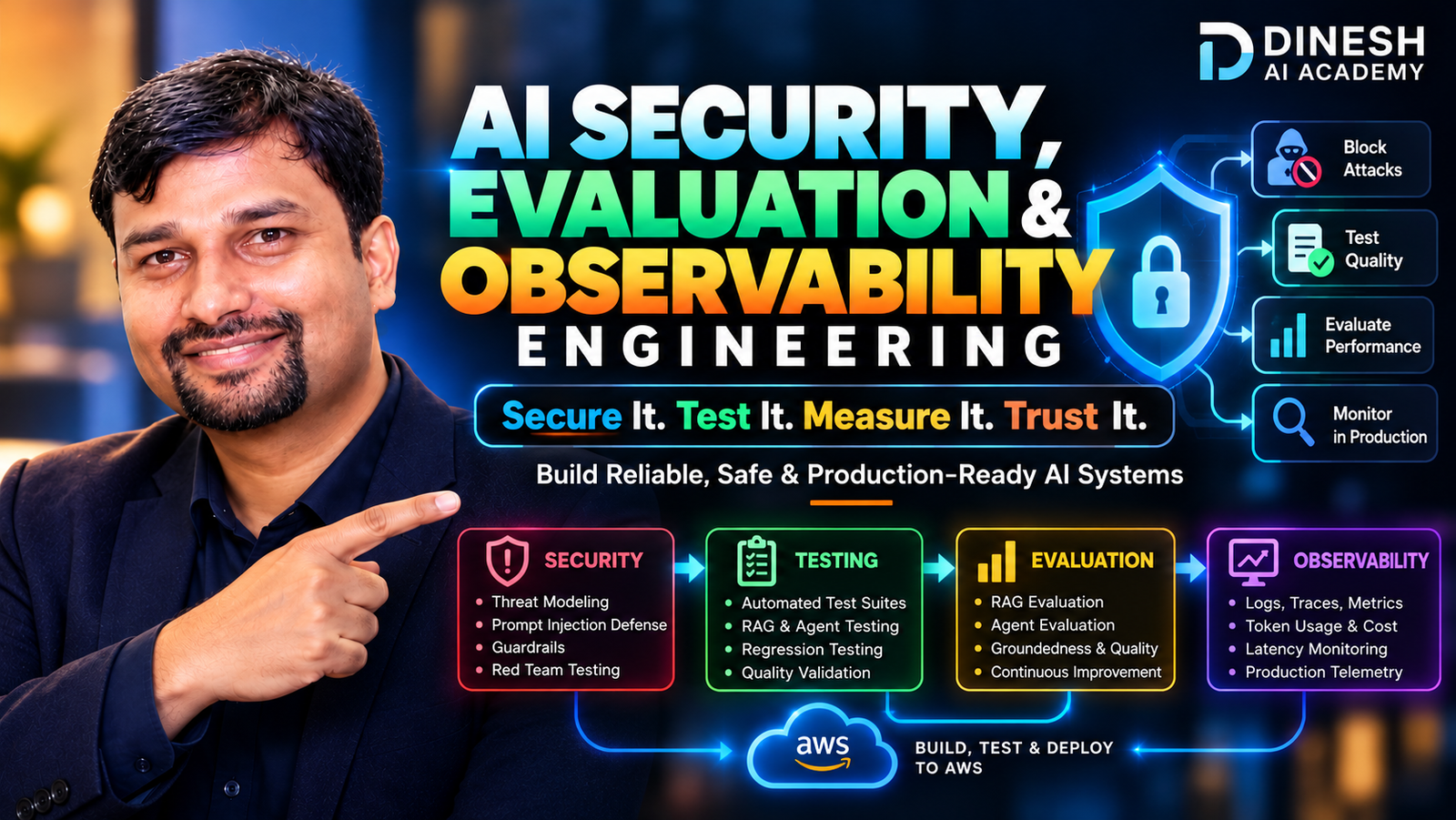
- Hallucination controls
- RAG evaluation
- Failure analysis
- Observability
🤖 AI-Assisted RAG Development
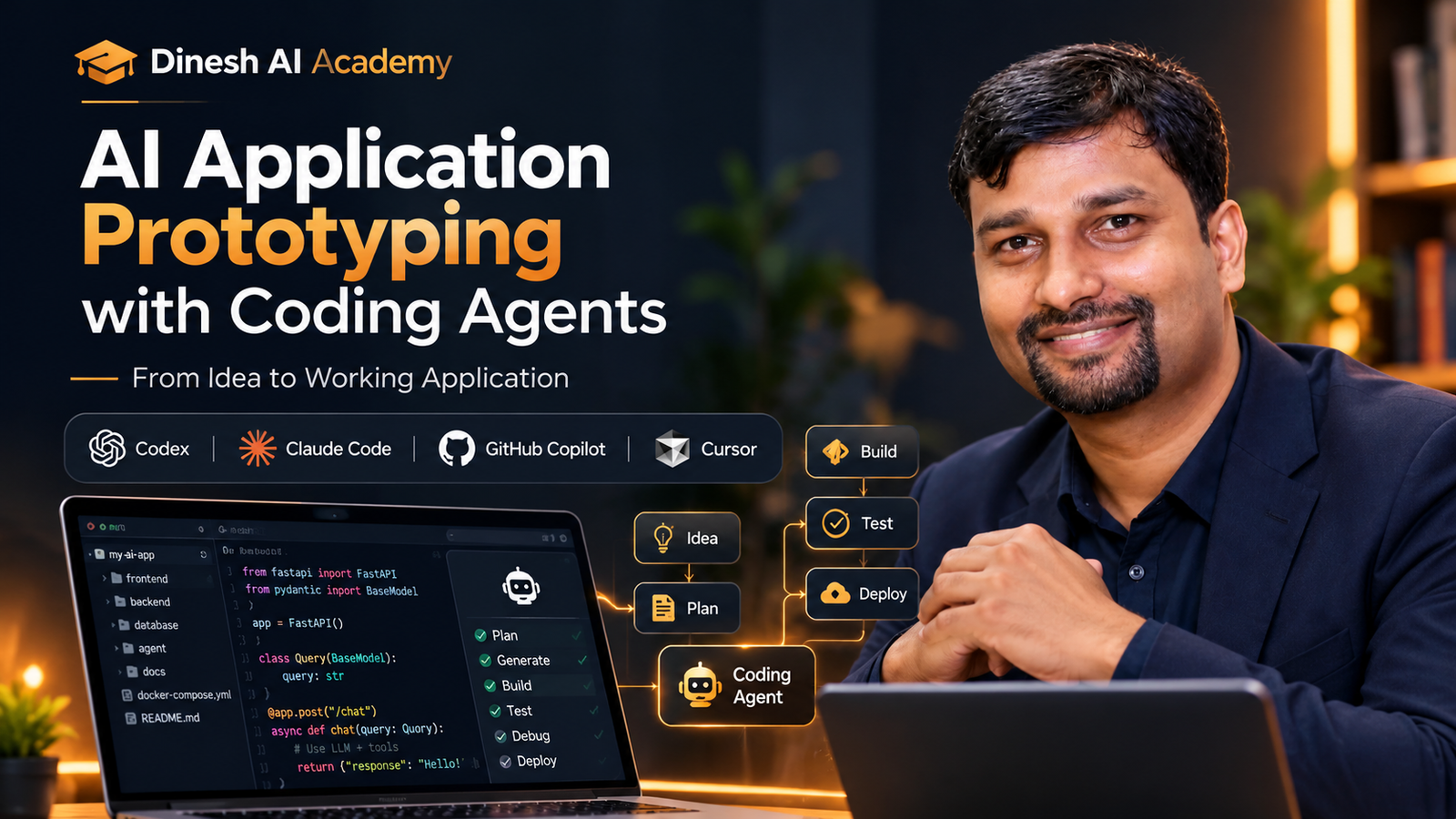
Use modern AI coding agents such as Codex, Claude Code, GitHub Copilot and Cursor to accelerate development, debugging, testing and optimization of your RAG application.
💻 What You’ll Build
You will build a production-oriented RAG application following the complete pipeline:
Enterprise Data → Processing → Chunking → Embeddings → Retrieval → Reranking → Context Engineering → LLM → Grounded Response → Citations → Evaluation
The goal is not simply to build a chatbot that can search documents.
The goal is to understand how to engineer a RAG system and improve it when retrieval, grounding or response quality is not good enough.
🎯 Who This Course Is For
Software Developers, AI/ML Engineers, Data Engineers, Architects, Tech Leads and developers who want to move beyond basic RAG implementations and learn how to design reliable, production-oriented RAG systems.
🌟 What You’ll Walk Away With
By the end of the specialization, you will have:
- A clear understanding of modern RAG architecture
- Knowledge of major RAG patterns and architectures
- Practical experience with advanced retrieval
- Understanding of chunking and embedding strategies
- Experience with semantic and hybrid search
- Understanding of reranking and query transformation
- Knowledge of Graph RAG and Agentic RAG
- Experience implementing citations and source attribution
- Understanding of RAG evaluation and reliability
- Experience troubleshooting retrieval and grounding problems
- A production-oriented RAG application
- Practical experience using AI coding agents for RAG development
The Outcome
Move beyond “Vector DB + LLM” and learn how to engineer RAG systems that are relevant, grounded, traceable, evaluable and production-ready.
📅 Program Format
2 Weeks | 4 Instructor-Led Live Zoom Sessions | Tuesdays & Thursdays | 8:00–9:30 PM IST
6 Hours Live Training + Hands-On Project